Ask food lovers anywhere in the world to name an Indian dish, and there’s a good chance chicken tikka masala comes up first — even before butter chicken. It’s been called Britain’s unofficial national dish, it appears on Indian restaurant menus from London to Los Angeles, and it remains one of the most-ordered curries on the planet. But despite its fame, it’s also one of the most misunderstood dishes on the menu. Here’s what it actually is, how it differs from its closest cousin, and where to find it done properly in Bangkok.
What Is Chicken Tikka Masala, Really?
At its core, chicken tikka masala is built in two distinct stages, and understanding them is the key to understanding the dish.
First comes the tikka: boneless chicken marinated in yoghurt, ginger, garlic, and a blend of warming spices, then skewered and cooked in a tandoor until it’s charred at the edges and juicy inside. This is chicken tikka on its own — a dish you’ll find served as a starter across countless Indian menus.
Then comes the masala: those smoky, tandoor-cooked pieces are simmered into a spiced tomato-and-cream gravy, finished with garam masala, kasuri methi (dried fenugreek leaves), and a touch of butter. The tandoori char from stage one doesn’t disappear — it lingers underneath the gravy, giving the dish a smokiness that sets it apart from a curry made with raw chicken simmered straight into the sauce.
That two-step process — grill first, then simmer — is what makes chicken tikka masala distinct, and it’s also the step that gets skipped in rushed versions, which is why the dish can taste wildly different from one restaurant to another.
Chicken Tikka Masala vs Butter Chicken: What’s the Real Difference?
This is the question that comes up more than almost any other when people order Indian food, and it’s a fair one — the two dishes are close cousins, not identical twins.
Butter chicken (murgh makhani) is typically richer and sweeter, built on a tomato base loaded with butter and cream, with a smoother, more mellow finish. The chicken is usually simmered directly into that buttery gravy.
Chicken tikka masala leans spicier and more layered. The chicken is grilled first, giving it a smoky char that butter chicken doesn’t have, and the gravy tends to carry more warmth from garam masala and a sharper tang from the tomatoes.
Think of it this way: butter chicken is comfort in its smoothest form, while chicken tikka masala brings a bit more punch and complexity to the same tomato-cream family. Both are excellent — they simply hit differently.
Where the Dish Actually Comes From?
Chicken tikka masala’s origin story is famously debated. Many food historians trace it to South Asian immigrant chefs in the UK, particularly Glasgow, who are credited with creating the dish by adding a tomato-cream sauce to tandoori chicken tikka to suit local tastes in the 1960s and 70s. Others point to earlier roots in Punjabi and Mughlai cooking traditions that already featured similar tandoor-then-gravy techniques.
Wherever it truly began, the dish has since become a global phenomenon — proof that Indian cuisine’s techniques travel and adapt without losing their soul.
Why It Works So Well for First-Time Indian Food Eaters?
Chicken tikka masala has earned its global popularity for good reason. The tandoori marination makes the chicken tender and flavourful on its own. The gravy is warmly spiced rather than aggressively hot, making it approachable for those new to Indian food. And the combination of char, cream, and tomato hits a flavour profile that feels familiar to a wide range of palates — which is exactly why it’s often the gateway dish that turns curious diners into regular Indian food lovers.
Finding an Authentic Chicken Tikka Masala in Bangkok
The dish’s popularity means it’s easy to find on menus across Bangkok — but an authentic version, made the proper two-step way with real tandoor-grilled chicken, takes more effort than most kitchens are willing to put in. Restaurants that skip the tandoor stage and simply simmer raw chicken in a tomato-cream sauce miss the smokiness that defines the dish.
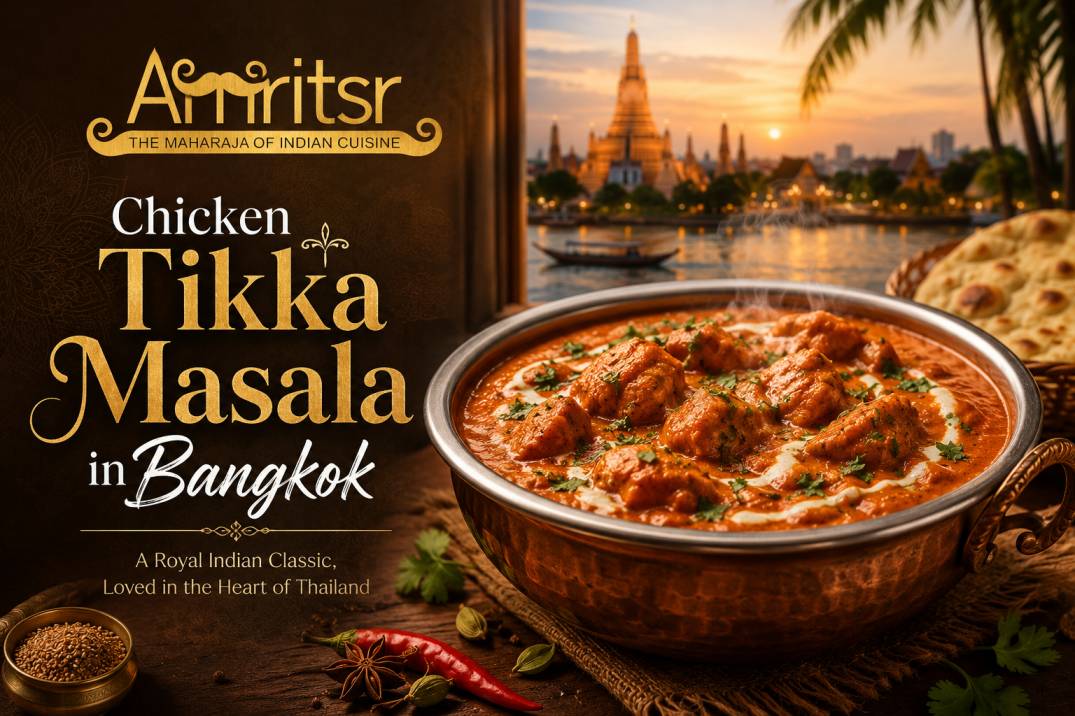
Amritsr Restaurant, with locations on Sukhumvit Soi 11 and Soi 22, prepares its tandoori dishes the traditional way — chicken marinated properly and cooked in a clay tandoor before it ever meets a gravy. That grounding in technique is what separates a genuine chicken tikka masala from an imitation, and it’s part of why the kitchen is consistently named among the best Indian restaurants in Sukhumvit by diners.
How to Order It Like You Know What You’re Getting?
A few tips for getting the most out of your plate:
Pair it with naan or rice. The gravy is rich enough to deserve both — naan for scooping, rice to soak up what’s left.
Ask about spice level. Chicken tikka masala is typically medium-spiced, but a good kitchen can adjust it milder or hotter on request.
Compare it to butter chicken. If you’re unsure which to order, ask for a small taste of both, or order one of each to share — it’s the best way to understand the difference for yourself.
Don’t skip the char. If the chicken doesn’t have any visible grill marks or smokiness, it likely skipped the tandoor step.
Frequently Asked Questions
What is chicken tikka masala made of? Chicken tikka masala is made from tandoor-grilled marinated chicken simmered in a spiced tomato-and-cream gravy, finished with garam masala and dried fenugreek leaves (kasuri methi). The tandoor stage gives it a smoky flavour that sets it apart from other tomato-based curries.
What’s the difference between chicken tikka masala and butter chicken? Butter chicken is generally milder, sweeter, and creamier, with chicken simmered directly into a buttery tomato gravy. Chicken tikka masala is spicier and smokier, since the chicken is grilled in a tandoor before being added to the sauce.
Where did chicken tikka masala originate? Its exact origin is debated. Many trace it to South Asian chefs in the UK who adapted tandoori chicken tikka into a tomato-cream curry to suit local tastes, while others link it to earlier tandoor-based cooking traditions in Punjab.
Is chicken tikka masala very spicy? It’s typically medium-spiced — warm and flavourful rather than fiery. Most restaurants can adjust the spice level on request to suit different preferences.
Where can I get authentic chicken tikka masala in Bangkok? Amritsr Restaurant, with locations on Sukhumvit Soi 11 and Soi 22, prepares its tandoori dishes using traditional methods, including properly tandoor-grilled chicken for an authentic chicken tikka masala.
Craving the real thing? Visit Amritsr Restaurant on Sukhumvit Soi 11 or Soi 22 in Bangkok for an authentic chicken tikka masala, grilled in the tandoor and simmered the traditional way.